
My Maine Coon Refused to Eat
for 3 Days — Here’s What I Found Out
It was a Tuesday morning in January when I noticed Leo’s food bowl was exactly where I left it the night before — completely untouched. At first, I stared at it for a few seconds, waiting for my brain to catch up. This was Leo we’re talking about. The same giant Maine Coon who could hear a bag of treats open from three rooms away and come running like I’d announced free pizza.

By Kristina Gregory
Maine Coon Owner
5 min read
My Maine Coon Refused to Eat
for 3 Days Here’s What I Found Out
It was a Tuesday morning in January when I noticed Leo’s food bowl was exactly where I left it the night before completely untouched. At first, I stared at it for a few seconds, waiting for my brain to catch up. This was Leo we’re talking about.
5 min read
Quick Overview
In this post, I will share what happened during Leo’s three-day food strike, what Dr. Sarah at our local animal clinic told me, and the five real reasons Maine Coons stop eating. Some of them are harmless. Others deserve immediate attention. Trust me, I learned the difference the hard way.
Maine Coons are known for having healthy appetites. They are big cats with big personalities and, usually, big opinions about dinner. So seeing my normally food-obsessed boy ignore breakfast set off alarm bells almost immediately. I tried not to panic. If you’ve landed here because your maine coon not eating has suddenly become your reality too, I know exactly how scary it feels. Your mind jumps from, Maybe he is just being picky, to Oh no, what if something is seriously wrong? in about thirty seconds flat. And that exactly what happened to me.
Day 1 to Day 3: Leo’s Unexpected Hunger Strike
Day 1
It started with dinner on a cold Tuesday evening in January. I served Leo the same chicken-based wet food he’d happily eaten for months. No new brand. No fancy recipe changes. Just his usual meal, warmed slightly the way he liked it. He sniffed it. Then he walked away. I remember laughing and telling my husband, Looks like somebody suddenly thinks he’s too good for chicken. Leo disagreed. He parked himself by the living room window and ignored me completely.
I wasn’t worried yet. Cats skip meals sometimes, right? Maybe he’d found an old treat under the couch. Maybe he just wasn’t hungry. aI went to bed assuming breakfast would fix everything.
Day 2
Breakfast didn’t fix anything. His dry food remained untouched. The wet food sat in the bowl long enough that I had to throw it away. Again. And that’s when I noticed something else. Leo wasn’t drinking as much water. He still followed me around the house. He still demanded access to the bathroom every time I closed the door. But his usual Maine Coon energy had dialed down a notch. Not enough to scream emergency. Enough to make me uneasy. I texted my friend Jake, who also owns two Maine Coons. “Has Moose ever randomly stopped eating?” I asked. Jake replied almost immediately. “Yep. Last winter. Thought he was being dramatic. Turned out he had a tooth issue.”
That message stayed in the back of my mind for the rest of the day. Because suddenly this did not feel like Leo simply being picky. It felt like something was off.
Day 3
By the third day, I had officially entered full cat-parent panic mode. At around 2 a.m I found myself sitting in bed with my phone lighting up the room while Leo slept beside me. I Googled “maine coon not eating” and disappeared down a rabbit hole of articles, forums, and worst-case scenarios like Hairballs, Kidney disease, Dental infections, Stress, Food refusal. You name it, I read it. By sunrise, I’d convinced myself Leo had approximately seventeen different conditions. None of which improved my ability to function like a normal adult the next morning. So I did the only sensible thing left. I called our vet the moment the clinic opened and booked the earliest appointment they had. Because whatever was going on, I needed real answers.
The Vet Visit
The Answers I Was Looking For
By the time we pulled into the parking lot of our local animal clinic, my anxiety had convinced me that Leo slightly quieter meow meant something terrible. Meanwhile, Leo was sitting in his carrier looking mildly offended that I’d interrupted his morning nap. The waiting room smelled faintly of disinfectant and dog treats. A golden retriever puppy was trying to make friends with everyone in sight. Leo wanted absolutely no part of it. A few minutes later, Dr. Sarah called us in. She started with the basics.
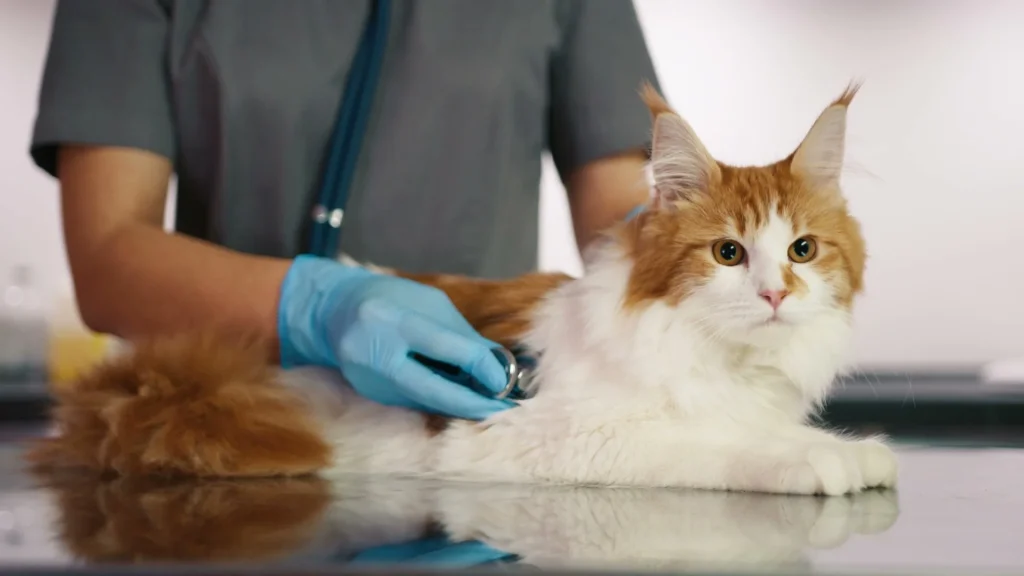
First, she checked Leo’s weight to see if he’d lost anything significant. Then she examined his teeth and gums, looking for redness, swelling, or signs of pain. She listened to his heart, took his temperature, and gently felt around his stomach to check for tenderness or blockages.
Secondly, watching her work actually calmed me down. She wasn’t rushing. She asked detailed questions about when Leo stopped eating, whether he’d been drinking normally, if there had been any recent changes at home, and whether I’d noticed vomiting, diarrhea, or hiding behavior. Then she said something that stuck with me.
There are really five main reasons cats like Leo suddenly refuse food,” she explained. “Most owners only know about one or two of them.
That surprised me. Because before this happened, I would’ve guessed illness and maybe picky eating. That’s it. But Dr. Sarah told me that maine coon loss of appetite can have several causes. Some are relatively harmless and improve quickly with simple changes. Others need medical attention right away. And understanding the difference can save you a lot of fear and sometimes save your cat from getting much sicker.
Here’s what she taught me.
Stress
Or a Change in Environment
This turned out to be Leo’s issue. A few days before his appetite disappeared, we’d had relatives staying at our house for the weekend. The house was louder than usual. Kids were running through the hallway. Furniture had been moved around to make space.
At the time, I didn’t think much of it. But Maine Coons can be surprisingly sensitive to changes in their environment.
Signs of stress can include eating less, hiding more often, sleeping in unusual places, or becoming clingier than normal. Some cats even stop using their favorite resting spots.
What helped Leo was creating a quiet space away from the chaos. Familiar routines matter more than we realize.
If your cat’s appetite changed after visitors, travel, renovations, or another household shift, stress could be behind the maine coon food refusal.
Dental Pain The
One Most Owners Miss
Jake cat Moose
Taught me this lesson before Leo ever had the chance to.Last winter, Moose suddenly stopped finishing his meals. Jake assumed he was being picky until a vet exam revealed a painful tooth problem.
Cats are masters at hiding discomfort.
A cracked tooth, inflamed gums, or dental disease can make chewing painful enough that eating simply isn’t worth it.
Warning
Sign to Watch For
At Home Check
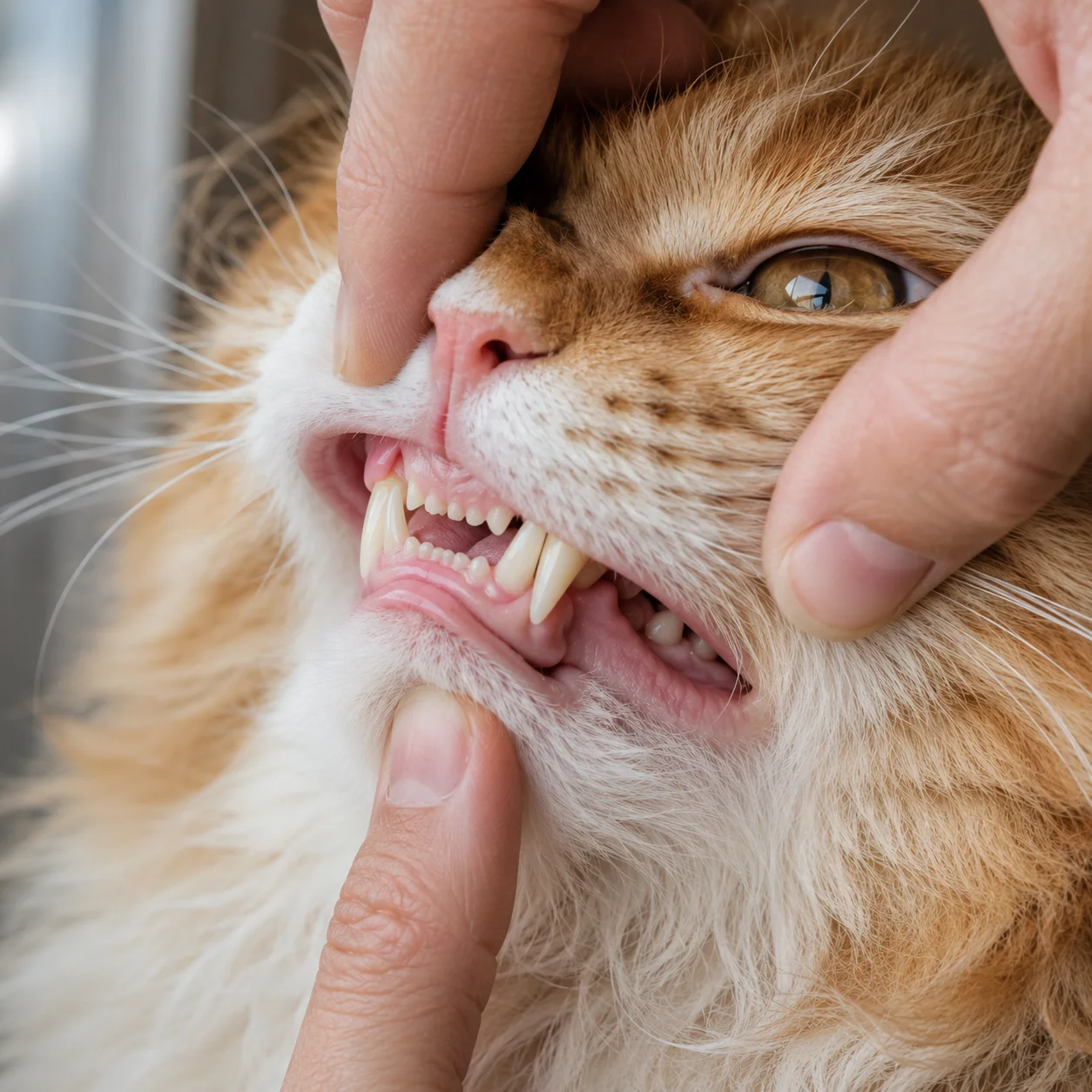
You can take a quick look at your Maine Coon’s gums at home if they’ll tolerate it.
But if you suspect dental pain, skip the internet detective work and schedule a vet visit. Early treatment usually means less discomfort and fewer complications.
Food Boredom
Or a Texture Problem
This one made me laugh a little because Maine Coons have very strong opinions about food. Leo once rejected an entire case of wet food because the manufacturer slightly changed the texture. Same flavor. Different consistency. Apparently, that was unacceptable.
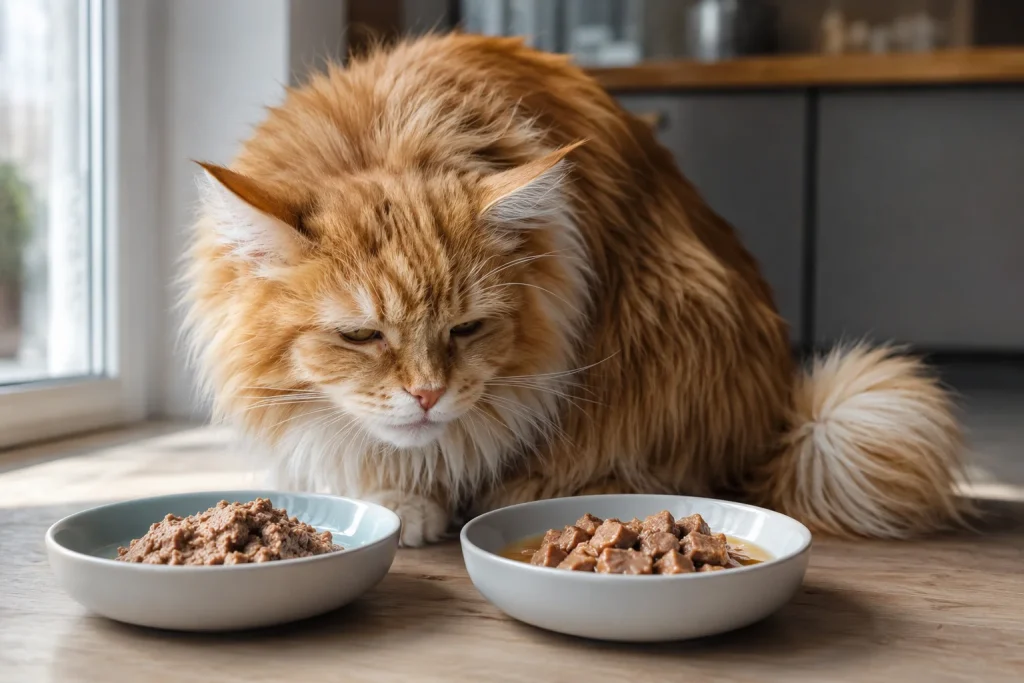
Some Maine Coons prefer pate. Others want chunks in gravy. And some decide that yesterday’s favorite meal is today’s greatest insult. If your cat seems interested in food but walks away after sniffing it, boredom or texture preferences may be the culprit.
Try rotating between approved flavors, slightly warming wet food, or adding a small wet food topper to encourage eating.
Just avoid changing everything at once. A sudden switch can upset their stomach and make the situation even more confusing.
An Underlying Health Issue
When to Worry
This was the cause I feared the most during my late-night Google spiral. And honestly, it’s the reason I always tell fellow cat owners not to wait too long before calling their vet.
A maine coon loss of appetite can sometimes point to an underlying health issue. Kidney disease, infections, pancreatitis, digestive problems, and even certain chronic conditions can affect a cat’s appetite.
Pay attention to the bigger picture. Is your cat vomiting? Losing weight? Hiding more than usual? Breathing differently? Drinking a lot more water or much less?
Those changes matter. Dr. Sarah told me that if your Maine Coon hasn’t eaten for 24 to 48 hours, especially if they’re showing other symptoms, it’s time to seek veterinary advice. Maine Coons are tough cats, but they shouldn’t go without food for long. Trust your instincts. You know your cat better than anyone else.
Hairballs and Digestive Slowdown
I hadn’t really considered hairballs until Dr. Sarah brought them up. But it makes sense. Maine Coons have thick, luxurious coats. They’re basically tiny lions wrapped in fur. And all that grooming means they swallow a lot of hair. Sometimes, that hair moves through the digestive system without a problem.
Other times, it slows things down. Signs can include reduced appetite, occasional gagging, constipation, vomiting, or acting uncomfortable after meals.
Regular brushing helps more than most people realize. So does making sure your cat stays hydrated. For some cats, your vet may recommend digestive support products or hairball remedies designed specifically for long-haired breeds. Leo didn’t seem impressed by my newfound enthusiasm for brushing sessions.
But he tolerated them for approximately three minutes, which in cat terms is basically a standing ovation.
Frequently Asked
Questions
What Finally Worked for Leo
The good news? Leo was okay.
After ruling out serious health concerns, Dr. Sarah believed stress from having guests in the house had triggered his appetite change. Once things settled down, we created a quiet space just for him, returned to his normal routine, and added a little wet food topper to tempt him back to the bowl. It worked.
The first time I heard him crunching kibble again, I nearly cried with relief. Okay, maybe I actually did cry a little.
If your maine coon not eating has you worried right now, here’s the checklist I wish I’d had from the start:
Having a Maine Coon means sharing your life with a cat who is equal parts majestic, stubborn, and dramatic. And sometimes, they scare us more than they’d ever understand.
Have you dealt with maine coon food refusal before? I’d love to hear your story. Drop your experience in the comments you never know which worried cat parent might need to read it.